

Work that's shaping.

Ideas, experiments and digital work in progress. No textbook marketing. No unnecessary jargon. Just ideas, observations and work worth sharing.

Work that's taking shape.

Marketing is always moving. This is where we share what we're learning, building and testing along the way, shaped by real conversations, real projects and real-world marketing challenges.

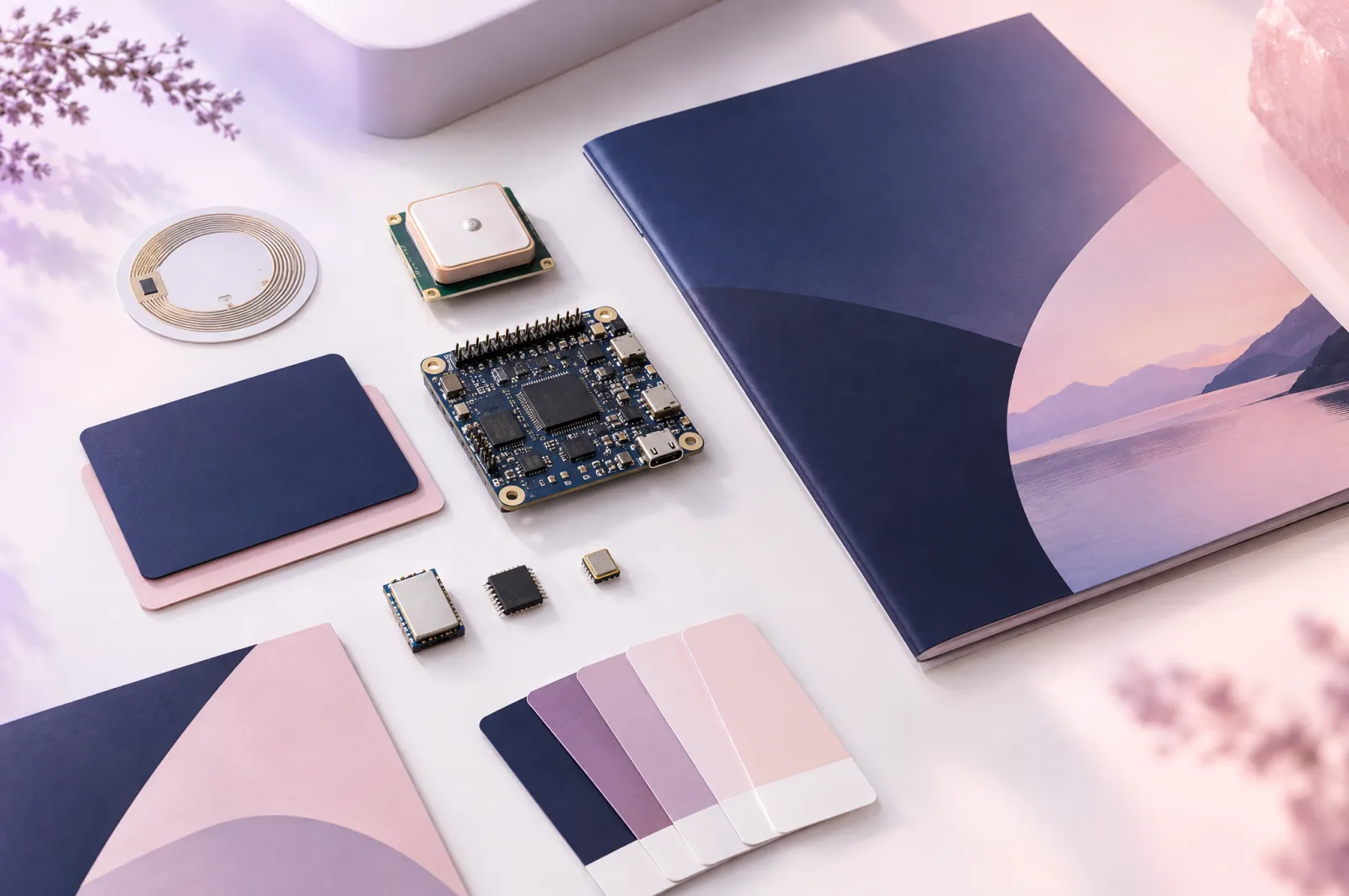
Technology components beside a printed brand brochure

From Technical Complexity to Brand Clarity

The business had grown through engineering depth, real-world applications and a diverse technology portfolio — RFID, NFC, GPS, IoT, embedded systems and industrial automation. Each capability had its own story, its own applications and its own technical value. But somewhere along the way, the sheer breadth of what the business could do made the larger brand story harder to see. It wasn't a question of having too little to communicate. There was simply too much competing for attention.

So we went back to the beginning — not to design, but to understand. We immersed ourselves in the products, technologies, industries, applications and customer segments to understand how the business actually created value in the real world. We also looked at the competitive landscape and how similar businesses were presenting themselves. The goal was to uncover the thread connecting everything: what did all these technologies ultimately enable the business to stand for?

That became the foundation for the brand positioning and messaging architecture. Instead of treating every product as an independent story, we connected technologies to the problems they solved and the outcomes they enabled. RFID could speak to traceability and visibility. NFC could speak to authentication and trust. IoT could speak to connected operations. The technology remained technical — but the story around it became easier for a business audience to understand.

From there, the thinking translated into a complete brand identity and communication system — visual language, tone of voice, messaging and creative direction — carried consistently across presentations, brochures, product documents, flyers, marketing creatives and digital channels. The objective wasn't to make the brand look different for the sake of it. It was to make every interaction feel like it belonged to the same business, with the same point of view and the same story.

The result was a shift from fragmented product communication to a connected brand narrative. What once needed multiple explanations could now be understood through a clearer story of capability, application and value. The business wasn't being asked to say less — it finally had a better way to make everything it had to say fit together.

Technical complexity became brand clarity.

Products became capabilities.

Capabilities became value.

And a portfolio became a story.
Laptop and phone on a desk with a funnel sketch

From Digital Presence to B2B Demand Generation

The Story Wasn't About Getting More Visible. It Was About Getting Noticed by the Right People.

The brand already had the technology, the engineering capability and years of experience behind it. What was missing was a digital presence that could translate all of that into something the market could quickly understand. Being on LinkedIn wasn't the challenge. The challenge was making sure the right decision-makers across manufacturing, supply chain, oil & gas, automotive, industrial operations and technology could see the relevance behind the technology.

So we started by changing the conversation. Instead of constantly talking about products, specifications and features, we began talking about the business problems behind the technology — traceability, asset tracking, authentication, inventory visibility, automation and operational efficiency. RFID became more than a product; it became a story about visibility. NFC became a story about authentication and trust. IoT became a story about connected operations. The technology stayed the same. The way the market understood it changed.

Then, LinkedIn Became More Than a Content Platform.

We built the channel around a clear B2B content and demand-generation strategy — combining industry insights, application-led content, technology explainers, case studies, engineering stories, innovation and company milestones. Every piece had a role: build awareness, demonstrate expertise, answer an industry question or create a reason for the right audience to engage.

And that visibility was connected to targeted LinkedIn prospecting and lead generation. Instead of waiting for the audience to find the brand, we identified relevant decision-makers and started conversations around the challenges their industries were already facing. Content created the context. Prospecting created the connection. Together, they turned LinkedIn from a place to publish into a channel for discovery, credibility and business conversations.

The Result Was a Change in the Quality of the Conversation.

The brand moved from simply showing what it could build to communicating why it mattered. Digital presence became industry relevance. Content became a conversation starter. LinkedIn became a bridge between technical capability and commercial opportunity.

The journey was simple:

VisibilityRelevanceEngagementConversationsOpportunity

Because the goal of B2B marketing isn't to be seen by everyone.

It's to be understood by the people who matter.

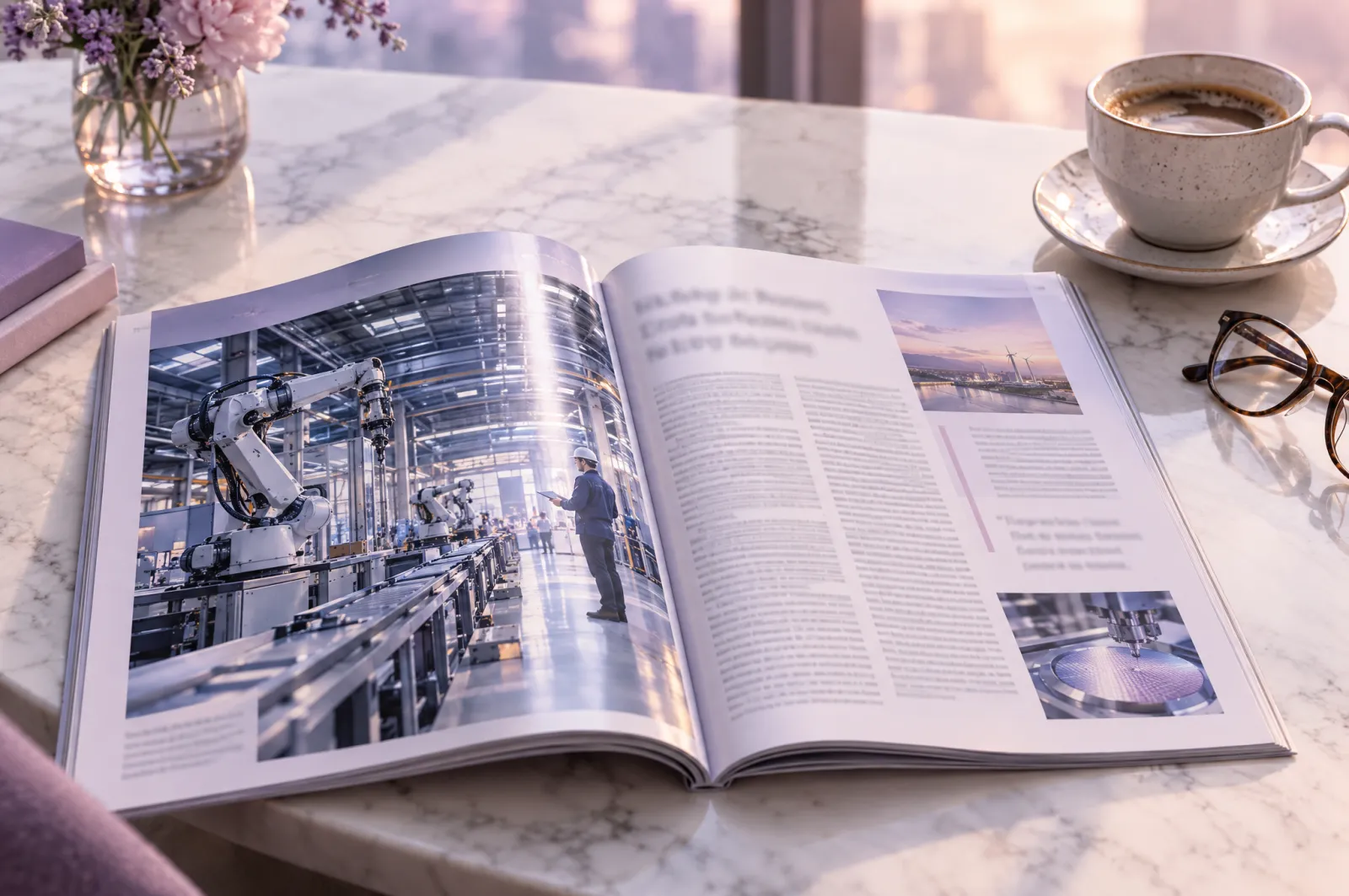
An open business magazine featuring industrial technology

From Technical Expertise to Industry Authority

Turning engineering depth, market experience and technology into stories that shape how an industry sees the brand.

The business had already built something substantial: field-proven technology, deep engineering capability and solutions operating across complex real-world environments. Its journey had moved from fuel-station automation into a much broader technology ecosystem spanning RFID, NFC, GPS, embedded systems and industrial IoT. The challenge was no longer about having enough to say — it was about turning years of technical capability and market experience into a brand story that industries could understand, connect with and remember.

We began by going beyond the product catalogue. Through market research, industry mapping and audience understanding, we explored where the technology was solving meaningful problems — from product identification and authentication to asset tracking, supply-chain visibility, inventory management, fleet intelligence and industrial automation. This helped us reshape the narrative around industry outcomes rather than technical specifications. RFID became a story about end-to-end asset visibility. NFC became a story about authentication and trust. GPS became a story about fleet intelligence. IoT became the connective layer bringing these systems together.

From there, we built the communication architecture around this thinking. We developed industry-specific narratives, product stories, case-study themes, marketing creatives and editorial content that could speak to different sectors while maintaining one consistent brand voice. We translated complex embedded technologies into stories around real operational challenges, practical applications and scalable solutions. The focus was to show not just what the technology could do, but how it could work within larger ecosystems — across fuel and energy, logistics, supply chains, manufacturing, fleet operations and other industrial environments.

That strategic foundation also gave us stories worth taking beyond the brand's own channels. We shaped the company's expertise, innovation and field experience into thought-leadership and editorial narratives, creating opportunities for wider industry visibility through platforms such as Industry Outlook. The story moved from individual products to a larger narrative around integrated technology ecosystems, innovation with purpose and solutions built for scale.

Because when technology has years of experience behind it, the job isn't to make more noise.
It's to find the stories that make the market understand why that experience matters.

From Product Communication → Industry Storytelling

From Technical Expertise → Market Relevance

From Owned Content → Thought Leadership

From Visibility → Industry Authority

More from TUVIQUE.

Digital Strategy

How businesses can think beyond individual channels and build connected growth ecosystems.

B2B Growth

LinkedIn, email, ABM, prospecting and the changing relationship between marketing and sales.

Creative & Branding

Ideas around positioning, identity, storytelling and building brands people remember.

AI & Marketing

What AI is changing in marketing, and where human thinking still matters most.

Search & GEO

How brands can prepare for a world where discovery happens across search engines, AI platforms and answer engines.

Performance & Growth

Campaign experimentation, attribution, conversion, customer acquisition and the numbers behind growth.

Behind the Work

Stories, lessons and observations from the brands and businesses we're fortunate enough to work with.

Your next big idea could start with a simple message.

Tell us what you're working on, where you want to go and what you're trying to achieve.